
Ready Simi: Build Your Emergency Go-Bag Before You Need It |
Wildfires, earthquakes and sudden evacuations can leave little time to prepare. Here’s what Simi Valley households should have packed and ready to grab. |
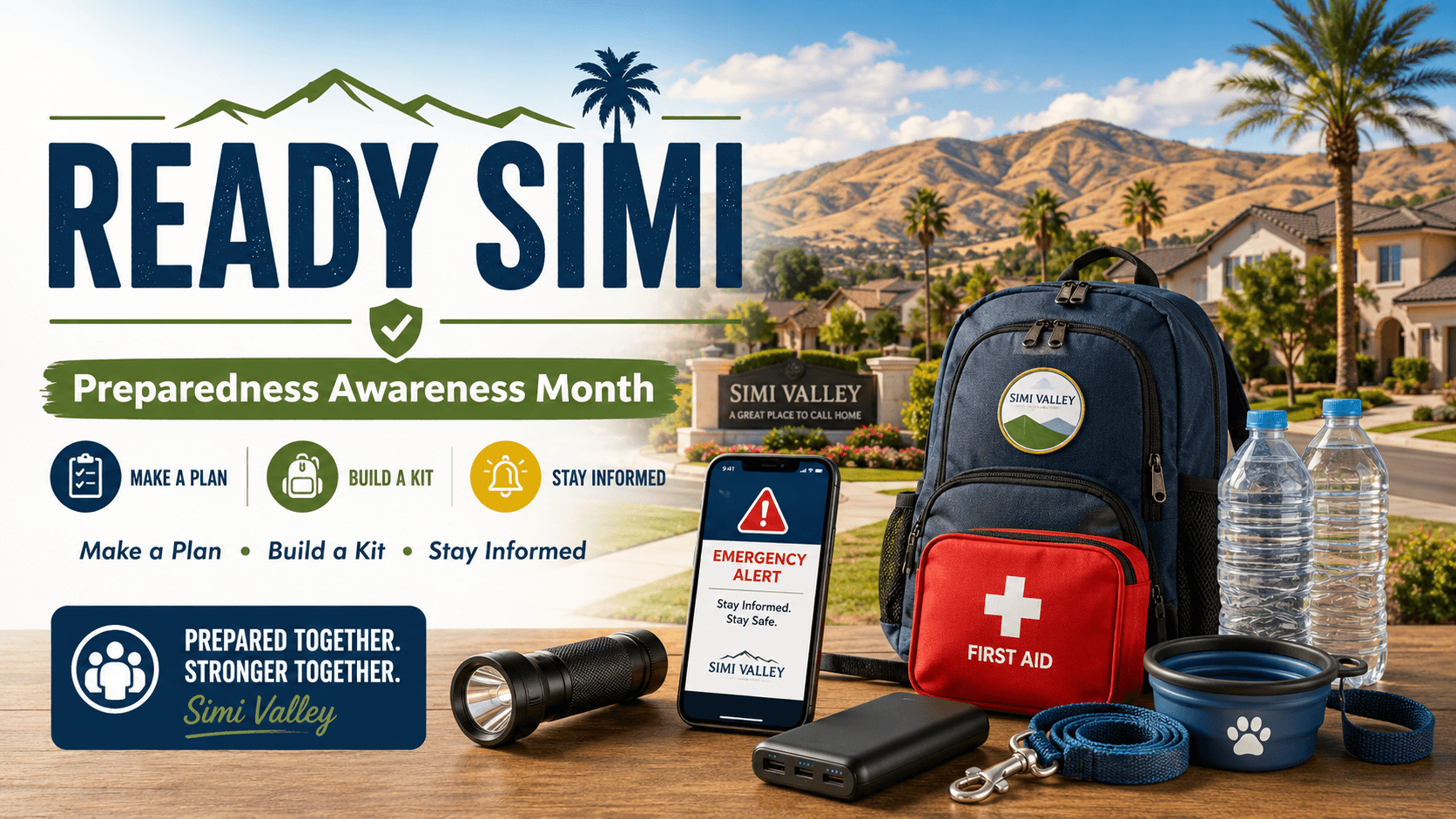
Ready Simi: Build a Go-Bag Before You Need It
Wildfires, earthquakes and unexpected evacuations can leave little time to decide what to take. A prepared go-bag can help your household leave quickly with the essentials already packed.
If an evacuation warning came through your phone tonight, how long would it take you to gather medications, chargers, important documents, water, clothing and everything else your household might need?
That is exactly why a go-bag is worth preparing before an emergency.
Throughout National Preparedness Month, we've looked at ways Simi Valley residents can stay informed and better prepared. For our final Ready Simi installment, we're focusing on one of the most practical steps you can take: packing the essentials you would want ready if you had to leave home quickly.
A Go-Bag Is Different From Your Home Emergency Kit
Ideally, every household should have both.
Your home emergency kit is designed to help you remain self-sufficient if you're staying home without normal utilities or services.
Your go-bag is smaller, portable and ready to grab if you need to evacuate.
The Simi Valley Office of Emergency Services recommends keeping supplies that can support your household for at least three days, along with smaller portable emergency kits in places such as your car or workplace.
What Should Go in It?
You don't need to prepare for every imaginable scenario.
Start with the things that would be difficult to replace or that you would need immediately.
Water & Food
Medications & Health
Communication & Power
Clothing & Personal Needs
Important InformationKeep copies of documents you may need if you can't immediately return home:
Consider storing digital copies securely as a backup as well.
Don't Forget Cash
Power or communications failures can temporarily disrupt credit-card terminals and ATMs. Keep some small bills and change with your emergency supplies for fuel, food, lodging or other immediate needs.
Pack for the Household You Actually Have
There is no universal emergency bag.
A household with young children will need different supplies than one with an older adult, someone who depends on medical equipment, or a family with pets.
Think about what your household would need during the first 72 hours away from home and personalize your supplies accordingly.
And yes — your pets need their own evacuation supplies too.
At minimum, have pet food, extra water, medications, a leash or harness, identification, a carrier when appropriate, and basic sanitation supplies ready to go.
We'll cover a complete Pet Go-Bag Checklist separately in this week's Forever Friends section.
Where Should You Keep It?
Your go-bag should be somewhere you can reach quickly — not buried behind holiday decorations in the garage.
Good locations might include:
Also consider keeping a smaller emergency kit in your vehicle.
One Thing People Often Forget: The Bag Itself
Don't make it so heavy that you can't carry it.
A backpack or sturdy duffel works well because it leaves your hands free. If your household needs more supplies, divide them among family members rather than creating one enormous bag.
Label bags clearly and periodically make sure clothing still fits, food hasn't expired, batteries work and medications are current.
The City of Simi Valley recommends reviewing and refreshing emergency supplies twice a year.
This Week's Ready Simi Challenge
Before September ends: ✓ Find a bag ✓ Add your essential medications and document copies ✓ Pack a flashlight, charger and power bank ✓ Add water and shelf-stable food ✓ Prepare supplies for children, older adults or medical needs ✓ Pack your pet's evacuation items
You don't have to build the perfect emergency kit in one afternoon.
The important thing is to start.
Because when an evacuation warning becomes an evacuation order, that's not the time you want to be walking through the house wondering what you've forgotten.
Make a Plan. Build a Kit. Stay Informed. |
0 Comments
Join the conversation
Be the first to comment
Share your thoughts above.