AI Made Simple: Can AI Help You Spot a Scam? |
Learn how to recognize suspicious texts and emails with ChatGPT—and what you should always verify yourself. |
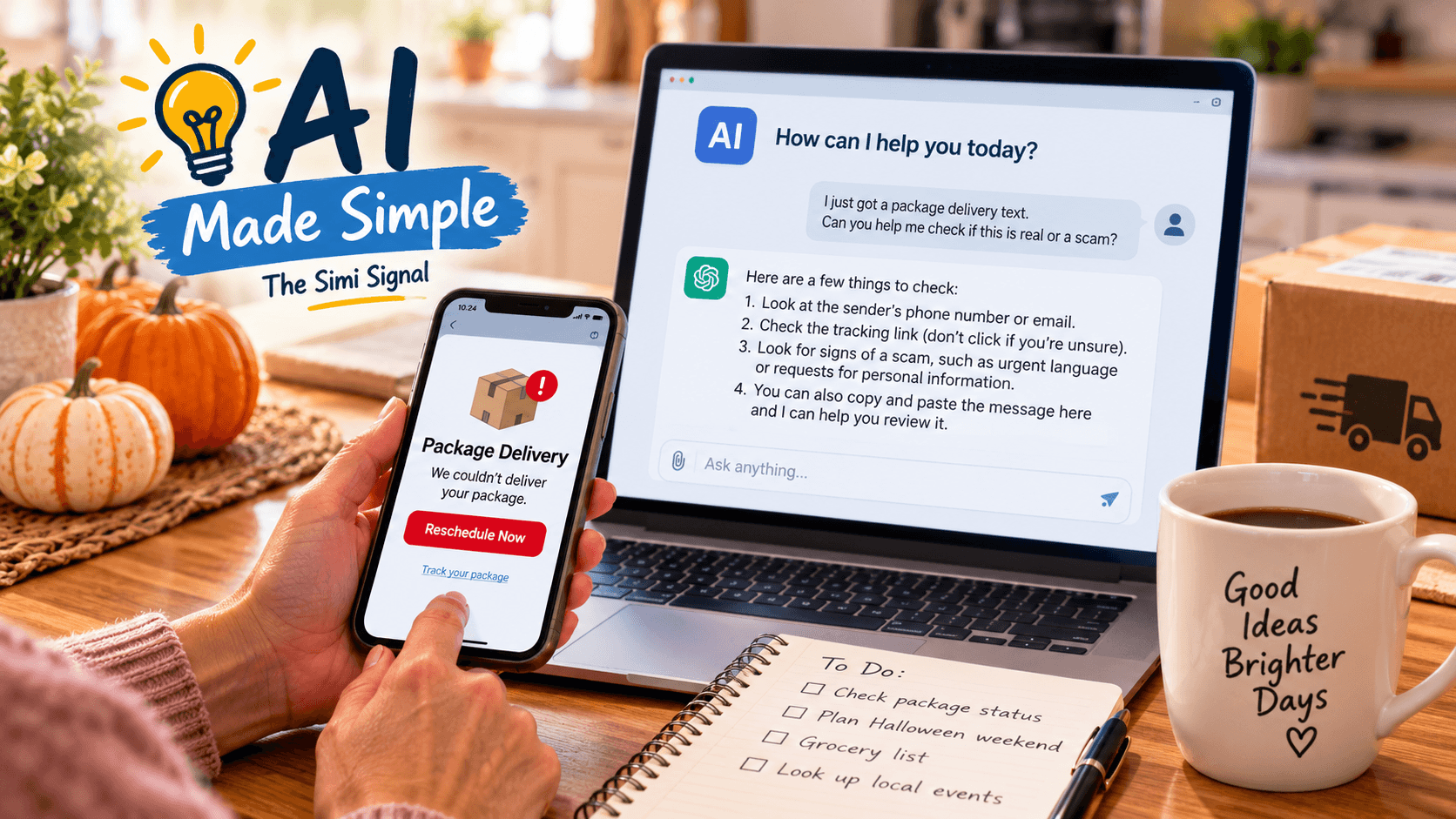
You receive a text saying your package can't be delivered.
Or an email claims there's a problem with your bank account and you need to act immediately.
The message looks official, perhaps even showing a familiar company name or logo.
But something doesn't feel quite right.
This week, we're using AI as a second set of eyes to recognize common warning signs in suspicious messages.
AI can help explain what to look for, but it cannot confirm whether a sender is genuine.
Step 1: Recognize the Red Flags
Scammers often create a sense of urgency because they want you to act before you have time to think.
Watch for urgent demands, such as a warning that your account will be suspended shortly.
Be cautious about unexpected payment requests, like a small fee to release a package.
Treat requests for passwords, verification codes, or account details as serious warning signs.
And watch for web addresses that don't match the organization the message claims to represent.
Scam messages don't always contain obvious spelling or grammar mistakes anymore; some look remarkably professional.
Step 2: Try This AI Prompt
Open ChatGPT or another AI assistant.
Do not upload the original message if it contains personal details or suspicious links.
Instead, copy only the relevant wording after removing names, email addresses, phone numbers, account information, links, and identifying details.
Copy and paste this prompt:
Act as a digital safety assistant. I'm going to share the wording of a message I received, with all personal information and links removed. Help me identify common warning signs of phishing or scams. Explain what makes the wording suspicious, what information the sender may be trying to obtain, and how I can independently verify the message. Use everyday language. Do not assume the message is definitely a scam or definitely legitimate. Remind me of anything I should verify myself. Here is the message: [Paste the edited message here.]
Step 3: Let's Try an Example
Imagine receiving this fictional text:
Your package could not be delivered. Confirm your address and pay a $1.95 redelivery fee within 24 hours to prevent your package from being returned.
An AI assistant might flag the pressure to act quickly, the unexpected payment request, and the attempt to collect personal information.
These are reasons to be cautious, not definitive proof of fraud.
If you're expecting a package, open the shipping company's official app or type its known website address directly into your browser.
Check the tracking information there instead of following a link from the message.
Step 4: Know What AI Cannot Do
AI can explain why wording seems suspicious, but it cannot reliably verify a sender's identity from the message alone.
It may overlook warning signs or sound confident about an incorrect conclusion.
Never share passwords, verification codes, Social Security numbers, bank details, or other sensitive information with an AI chatbot.
And never click a questionable link simply to gather more information for AI.
This Week's AI Takeaway
When a message pressures you to act immediately, take a moment to check it independently.
AI can help you ask better questions, but the safest next step is to contact the company through a website, app, or phone number you already trust.
A few extra minutes could save you a considerable headache.
For more consumer protection guidance, visit the Federal Trade Commission's scam prevention resources.
AI Made Simple is a weekly feature of The Simi Signal, helping readers put artificial intelligence to practical use in everyday life. |
0 Comments
Join the conversation
Be the first to comment
Share your thoughts above.